Built so you can put it in front of a funder.
Grant work punishes guesswork. Every layer of the grants suite is grounded in verifiable sources — public filings, live listings, and your own documents — instead of model imagination.
Discovery that can't hallucinate
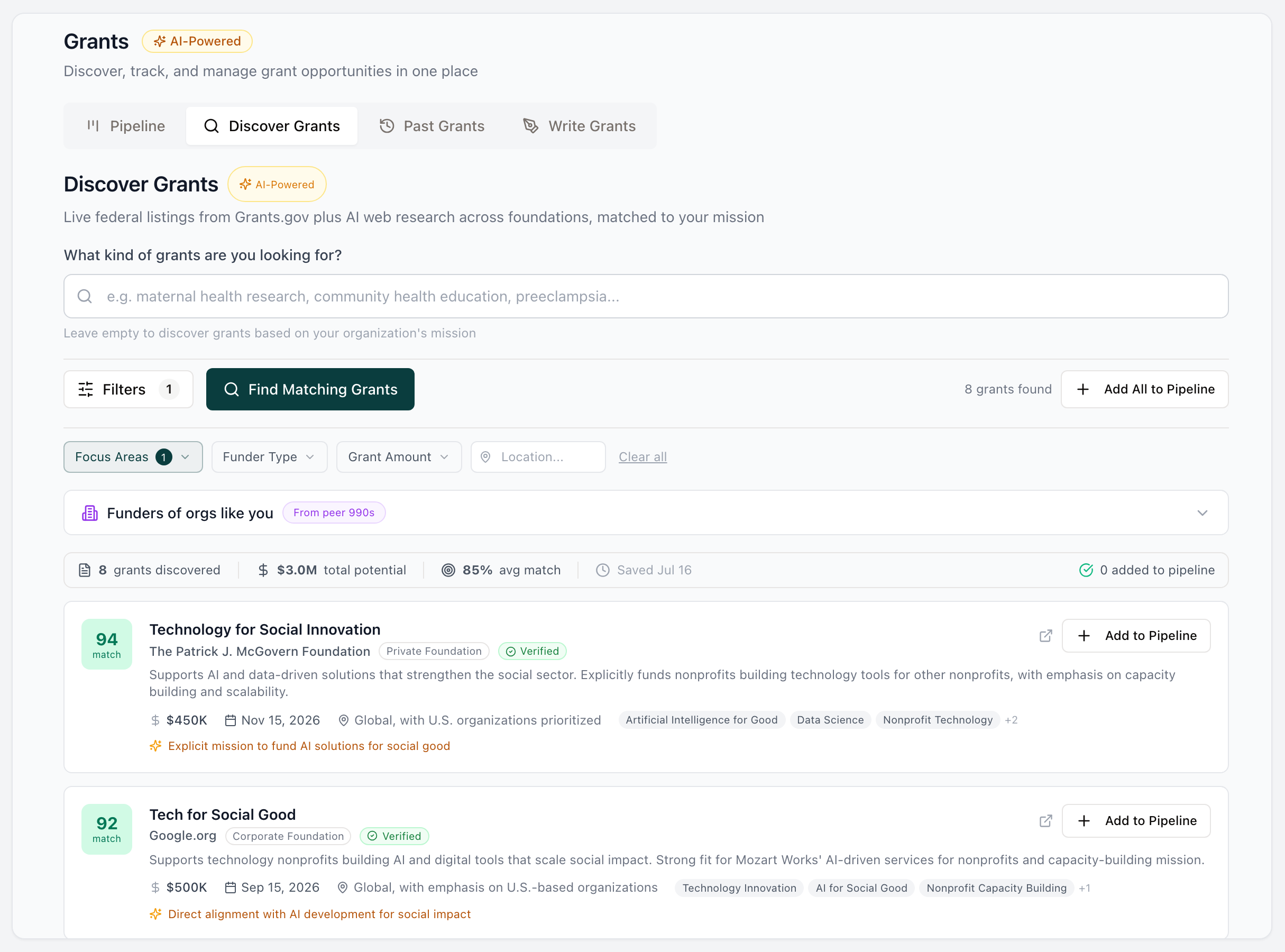
Live federal listings pulled straight from Grants.gov — real deadlines, real award ceilings, real application links — plus AI web research across foundations where every result carries its source.
Every grant verified
A verification pass re-checks each application page and marks grants verified or flagged before you spend a minute on them. Dead links and closed cycles get caught by the software, not by you.
A writer that cites your actual 990
Drafts are grounded in a citable evidence pack — your real Form 990 program accomplishments, financials, and past awards — cited inline, so every claim in your proposal traces to a source.
Funder intelligence from their 990s
Before you ask, know what the funder actually writes: their median check size, the range, where they give, and how open they are to new grantees — computed from their own filings.
A calibrated ask
Ask-range nudges keep your request inside the funder's real giving pattern — no more guessing between $10K and $100K.
Warm paths through your board
Your board roster is matched against the funder's officers to surface possible connections — always framed as a lead to verify, never a claim.
One pipeline, from first look to submitted.
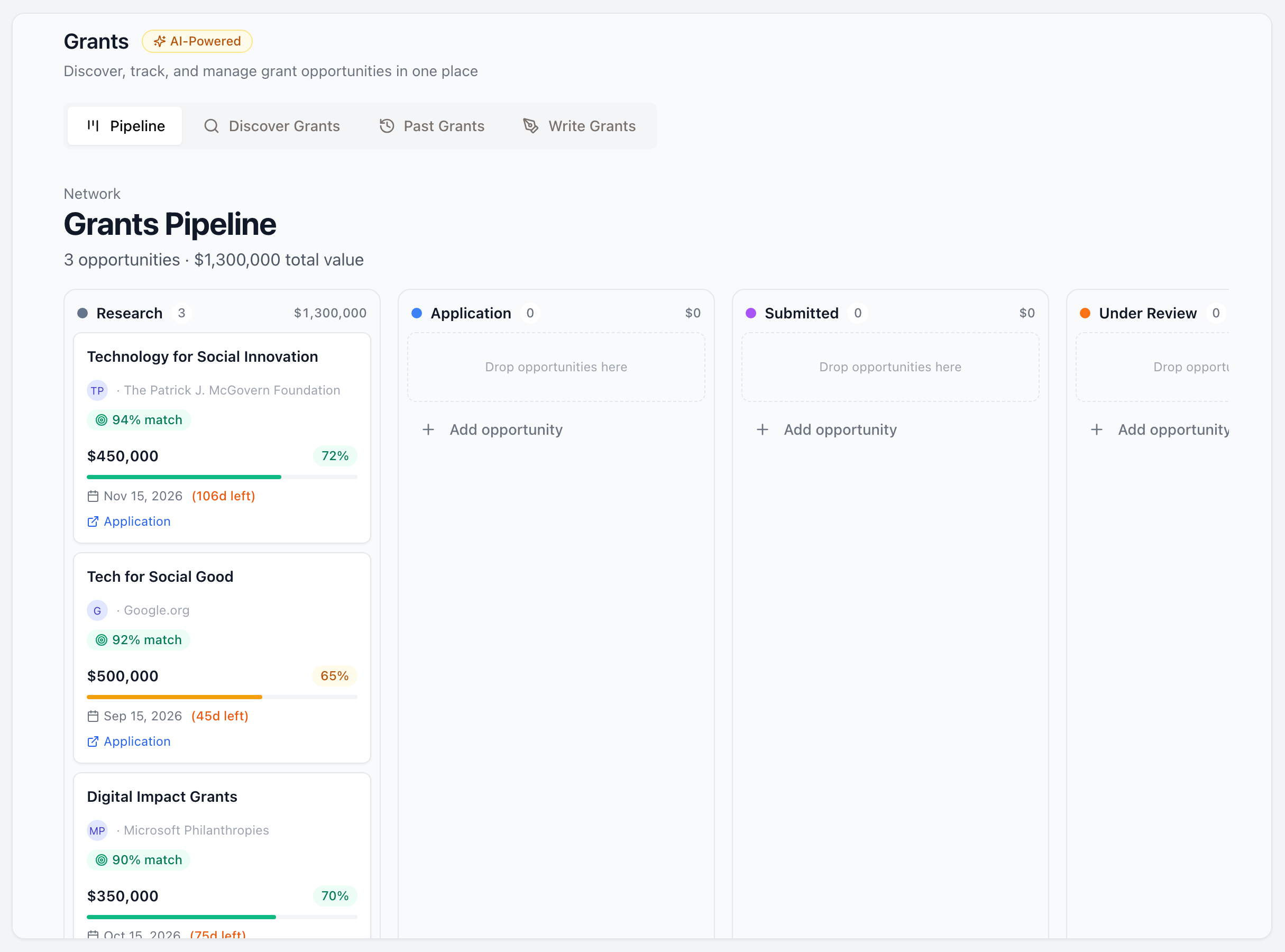
Every opportunity carries its match score, deadline countdown, and win probability as it moves through research, application, and submission — so Monday morning starts with "what's next," not "what happened."
Pick an opportunity. Start writing.
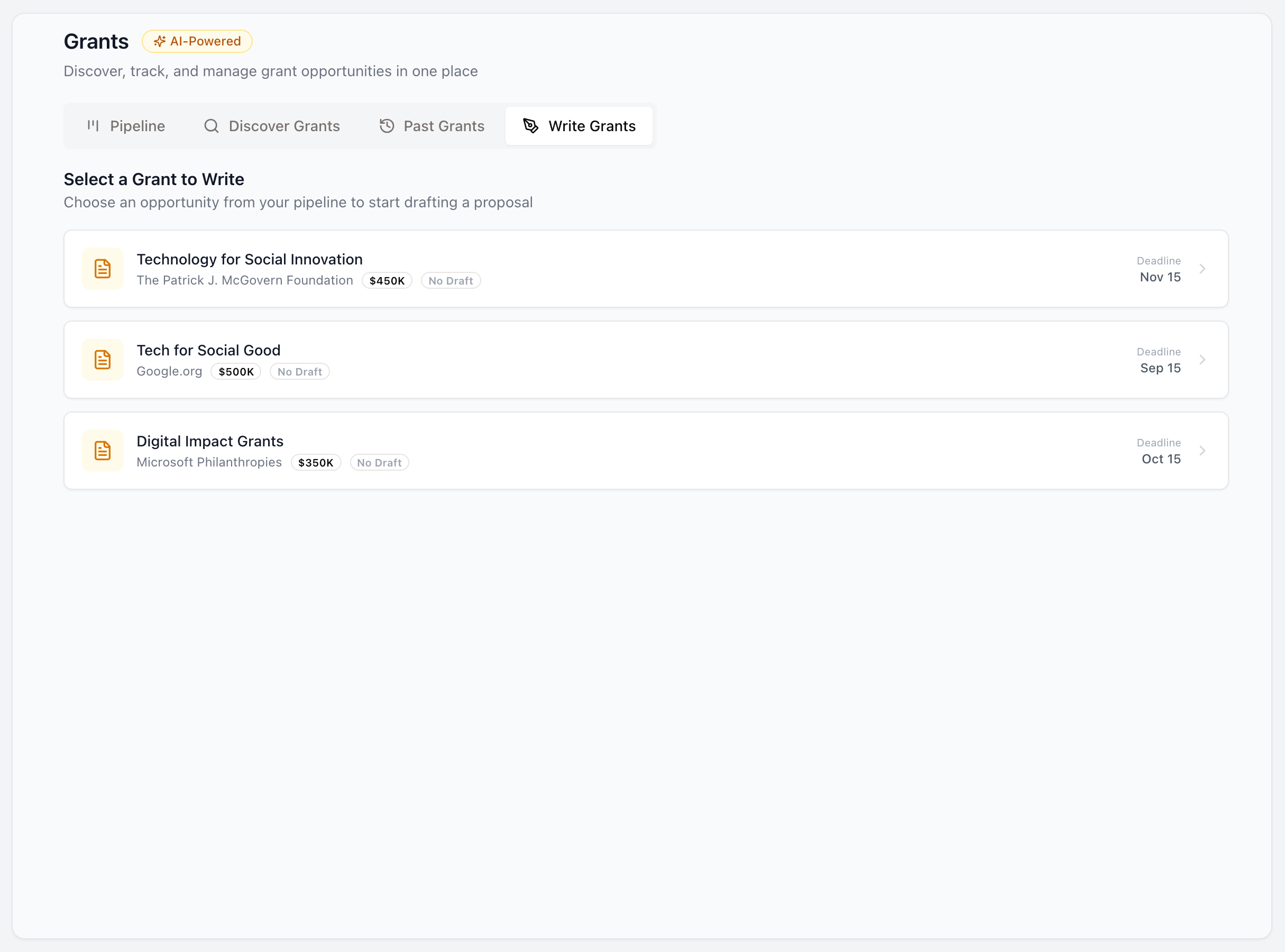
The writer drafts against your grounding pack — mission, programs, financials, and past awards from your own filings — then reviews and fixes its own work before you ever polish a paragraph.